BLOGS
Learning to Teach, Learning to Discover: The Dual Path of Undergraduate Scientific and Educational Engagement
Published 2026-10-29
5 minute read · HE Observatory
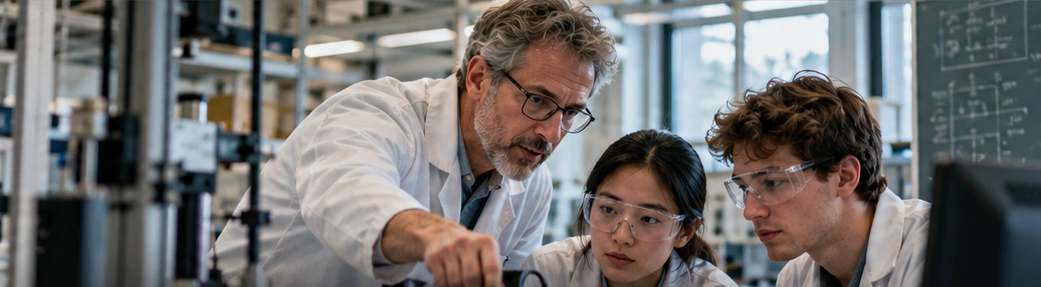
In the modern higher education landscape, the traditional boundary between conducting advanced research and engaging in community teaching is increasingly fluid. A compelling illustration of this dual trajectory is found in the academic journey of MIT senior Nik Sandu, whose work bridges scientific research with a deep commitment to education and community outreach. This article examines the intersection of undergraduate research and pedagogy, exploring how the dual pursuits of discovery and instruction inform one another within a rigorous university environment.
### Factual Overview of the Case
According to institutional reporting from the Massachusetts Institute of Technology, Nik Sandu is an MIT senior who has demonstrated a sustained focus on both scientific research and educational engagement. Rather than viewing laboratory investigation and community teaching as competing interests, Sandu’s academic path integrates these two domains. The specific trajectory highlights a growing archetype in higher education: the student-scholar who values not only the generation of new scientific knowledge, but also the transmission of that knowledge to broader communities and peers.
### Analytical Perspectives: The Symbiosis of Research and Pedagogy
From an analytical standpoint, combining high-level scientific research with teaching responsibilities creates a mutually reinforcing intellectual cycle. When a student engages in original discovery, they are forced to confront the limits of current knowledge, master complex methodologies, and tolerate ambiguity. These very competencies are vital for effective teaching. To explain a complex scientific concept to others, an individual must first deconstruct their own understanding, identifying foundational principles and potential misconceptions.
Furthermore, communication skills honed through teaching often enhance a researcher's ability to articulate scientific findings. Translating intricate technical details into accessible language requires a high degree of cognitive clarity. Consequently, the act of teaching serves as a rigorous test of comprehension, compelling researchers to refine their mental models. Conversely, direct exposure to active research infuses teaching with authenticity. Educators who are simultaneously engaged in discovery can offer students a firsthand perspective on how scientific questions are formulated, tested, and revised, moving textbook learning closer to real-world practice.
### Conceptual Context and Institutional Frameworks
In contemporary higher education, undergraduate research experiences (UREs) are widely recognized as a high-impact practice. Institutions of higher learning increasingly emphasize experiential learning, encouraging students to transition from passive consumers of information to active producers of knowledge. When these research-oriented frameworks are paired with community engagement and teaching initiatives, students develop a holistic skill set that extends beyond narrow technical specialization.
Community-oriented teaching also addresses a persistent challenge in higher education: the ivory tower phenomenon, where academic institutions remain isolated from the surrounding populace. By bridging scientific inquiry with community outreach, students learn to contextualize their work within broader societal needs. This dual focus fosters civic responsibility alongside academic excellence, preparing graduates to navigate complex professional environments where collaboration and communication are paramount.
### Limitations and Challenges
While the integration of research and teaching yields significant benefits, it is important to acknowledge the inherent limitations and structural challenges of this approach. Pursuing excellence in both scientific discovery and educational outreach demands substantial time and emotional energy. Undergraduate students already face intense academic pressures; balancing demanding laboratory hours with community teaching commitments risks burnout if proper institutional support and time-management structures are absent.
Additionally, the skill sets required for rigorous scientific research and effective pedagogy, while complementary, are distinct. Mastery of one domain does not automatically guarantee proficiency in the other. Effective teaching requires training in instructional design, empathy, and classroom management—skills that are not always explicitly taught in traditional science, technology, engineering, and math (STEM) curricula. Therefore, while individual trajectories like Sandu’s demonstrate the potential of this dual path, scaling such models requires deliberate institutional investment in pedagogical training for student-scholars.
### Conclusion
The trajectory of students who successfully navigate both scientific research and community teaching offers valuable insights into the evolving goals of higher education. By fostering an environment where learning to discover and learning to teach go hand in hand, universities can cultivate versatile thinkers capable of advancing human knowledge while effectively communicating its value to society. While challenges such as time constraints and the need for specialized pedagogical training remain, the synthesis of research and instruction points toward a more integrated, outward-looking academic model.
Building upon the interplay between scientific inquiry and educational outreach, it is analytically valuable to examine the broader systemic implications of integrating these domains at the undergraduate level. When students like Nik Sandu operate at the intersection of laboratory discovery and community teaching, they challenge the traditional bifurcation of academic labor, which often separates researchers from educators. This convergence suggests that the development of technical expertise is deeply enhanced by the concurrent requirement to communicate those concepts to diverse audiences. Methodologically, this dual engagement relies heavily on iterative feedback loops: hypotheses tested in research settings are continuously evaluated and restructured when translated into pedagogical frameworks.
However, evaluating this model requires careful consideration of its inherent limitations and institutional boundaries. One primary constraint is the risk of role overload. Scientific research demands meticulous adherence to experimental protocols, data collection, and analytical precision, whereas community teaching requires high emotional intelligence, adaptability, and relational investment. For an undergraduate navigating these spaces, the simultaneous pursuit of both tracks can create competitive internal friction regarding time allocation and cognitive bandwidth. Without robust mentorship and structured institutional scaffolding, students may find it difficult to sustain high-level output in both areas without compromising their overall well-being.
Furthermore, a critical methodological limitation lies in the assumption that research excellence naturally translates into teaching efficacy. The skills necessary to parse complex empirical data or operate sophisticated laboratory equipment do not inherently encompass instructional design, formative assessment, or inclusive pedagogy. While the source text highlights the symbiotic nature of teaching and discovery, systemic success depends on whether institutions provide explicit pedagogical training to student-scholars. Without such preparation, community teaching initiatives risk lacking standardized educational outcomes, relying too heavily on the innate charisma or individual dedication of exceptional students rather than sustainable, evidence-based teaching methodologies.
Ultimately, while the trajectory exemplified by Sandu’s academic path points toward a promising, outward-looking model of higher education, scaling this approach requires a nuanced understanding of its structural demands. Universities must carefully weigh the benefits of experiential, community-oriented learning against the potential strain placed on undergraduate participants. By acknowledging both the generative synergies and the operational limitations of combining research with education, academic institutions can better design frameworks that support versatile, socially engaged scholars without precipitating burnout or diluting the rigor of either scientific discovery or instructional outreach.